
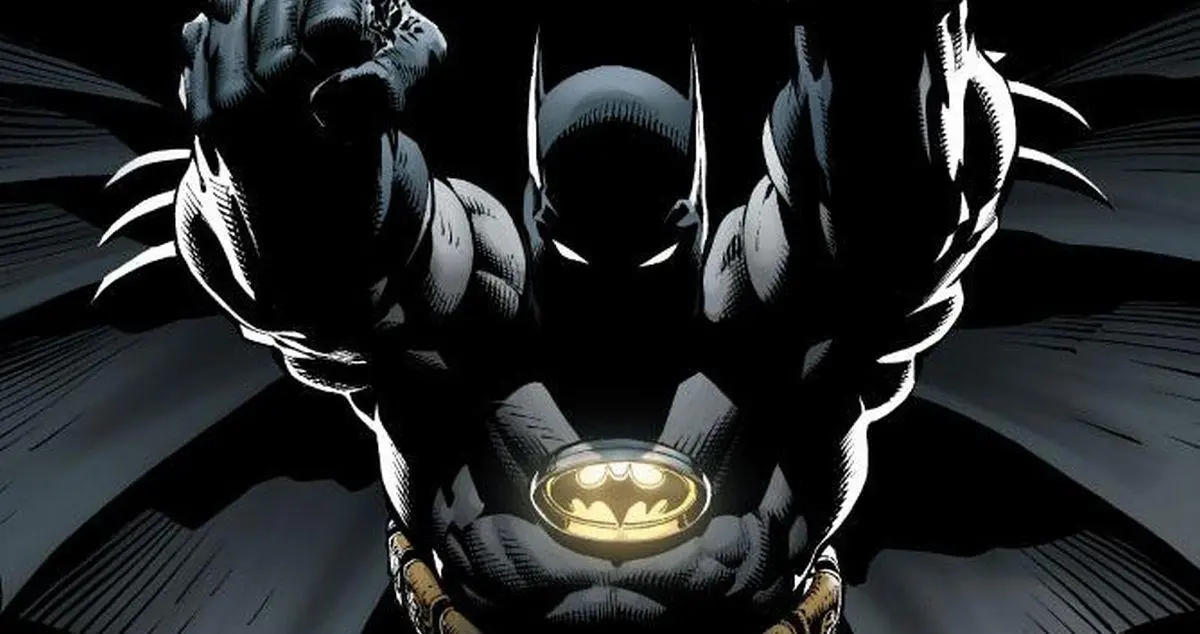
No superhero in the history of cinema has had a more fascinating, more varied, and more culturally significant film legacy than Batman. From the gothic expressionism of Tim Burton’s vision to the grounded realism of Christopher Nolan’s operatic trilogy to the neo-noir detective drama of Matt Reeves’ recent reinvention, Batman has been reimagined on screen more times and more successfully than virtually any other comic book character.
The five films on this list, along with one very worthy honorable mention, represent the pinnacle of what Batman cinema has achieved across nearly four decades of storytelling. Each one earned its place through a combination of performance, vision, tone, and the ability to say something meaningful about the man behind the mask.
Number One: Batman (1989)
Batman Played By: Michael Keaton
There is a strong argument to be made that without Tim Burton’s 1989 Batman, the entire landscape of superhero cinema as we know it today simply does not exist. Before this film, the dominant cultural reference point for Batman was the campy, colorful Adam West television series of the 1960s. Burton’s vision changed everything in a single stroke. He took the character seriously, built a world around him that felt genuinely dangerous and psychologically complex, and delivered a film that proved superhero stories could be dark, operatic, and artistically ambitious without losing mainstream commercial appeal.
Michael Keaton’s casting was one of the most controversial decisions in Hollywood at the time. Fans protested. Letters were written. The prevailing wisdom was that Keaton, known primarily for comedic roles in films like Beetlejuice and Mr. Mom, was completely wrong for the role. What Keaton delivered instead was one of the most psychologically interesting portrayals of Bruce Wayne ever committed to film.
His Batman is quiet, strange, slightly unnerving, and completely believable as a man who puts on a bat costume and goes to war with criminals every night. There is something genuinely off about Keaton’s Bruce Wayne in the best possible way. He is not the polished billionaire playboy of later interpretations. He is a deeply peculiar man who has found an equally peculiar purpose, and Keaton makes you believe every frame of it.
Jack Nicholson’s Joker, alongside him, is a force of gleeful, terrifying chaos, and the dynamic between the two creates one of the greatest hero and villain pairings in superhero film history. Burton’s Gotham City, designed by Anton Furst in a style that blended art deco grandeur with industrial decay and Gothic nightmare, remains one of the most visually distinctive settings ever created for a comic book adaptation. This film earns the top spot not just for what it is but for what it started.
Number Two: Batman Returns (1992)
Batman Played By: Michael Keaton
Tim Burton’s sequel to his 1989 original is a more divisive film than its predecessor, and that divisiveness is precisely what makes it so fascinating. Batman Returns is darker, stranger, more overtly expressionistic, and considerably less interested in conventional superhero storytelling than the first film. It is in many ways less of a Batman movie and more of a Tim Burton movie that happens to feature Batman, and depending on your perspective, that is either its greatest strength or its primary weakness.
Michael Keaton returns, and if anything, deepens his portrayal of Bruce Wayne in interesting directions. But the film belongs to its villains in a way that no Batman film before or since has quite replicated. Michelle Pfeiffer’s Catwoman is one of the greatest comic book villain performances in the history of the genre, a fully realized, psychologically complex, and genuinely dangerous character whose arc is as tragic as it is thrilling. Danny DeVito’s Penguin is grotesque and operatic and heartbreaking in equal measure, a creature defined by rejection and resentment who weaponizes his monstrousness with devastating effectiveness.
What earns Batman Returns its place at number two is its willingness to be genuinely weird in the service of genuine emotion. This is a film about outsiders, about people who do not fit the world they were born into and who create alternative identities to survive that alienation. That theme connects Bruce Wayne, Selina Kyle, and Oswald Cobblepot in ways that feel genuinely literary rather than just commercially convenient. It is a braver and in many ways more interesting film than its predecessor, even if it is a slightly less essential one.
Number Three: Batman Begins (2005)
Batman Played By: Christian Bale
Christopher Nolan’s Batman Begins accomplished something that seemed almost impossible in 2005. After the catastrophic critical and commercial failure of Batman and Robin in 1997, the Batman film franchise was declared dead. Warner Bros. had tried and failed to reboot it multiple times. The conventional wisdom in Hollywood was that Batman, as a serious film property, was finished. Nolan ignored the conventional wisdom entirely and delivered a film that not only revived the franchise but fundamentally changed the way superhero origin stories were told.
Batman Begins is the most grounded and psychologically rigorous origin story the character has ever received on screen. Nolan and co-writer David Goyer were interested not in the mythology of Batman as a superhero but in the psychology of Bruce Wayne as a human being. The film asks a question that sounds simple but has never been explored with this level of seriousness on screen before: what would it actually take for a person to become Batman? What grief, what obsession, what training, what moral philosophy would have to come together to produce this particular response to this particular trauma?
Christian Bale’s Bruce Wayne is arguably the most complete and fully realized version of the character ever put on film. He is charming enough to be believable as a billionaire, haunted enough to be believable as a man consumed by grief and obsession, and physically imposing enough to be entirely credible as the world’s greatest non-powered combatant.
Bale brought a seriousness and a commitment to the role that set the tone for everything that followed in Nolan’s trilogy. Liam Neeson’s Ra’s al Ghul and Cillian Murphy’s Scarecrow are among the most underrated villain portrayals in superhero cinema, and the film’s third-act reveal of Ra’s true identity remains one of the great plot twists of the genre. Batman Begins earns its place at number three by being the film that proved Batman could be reborn and that the character’s greatest stories were still ahead of him.
Number Four: The Dark Knight (2008)
Batman Played By: Christian Bale
Some people would argue, and argue passionately, that The Dark Knight belongs at the top of this list rather than at number four. It is not a difficult argument to make. The Dark Knight is by almost any measure the most acclaimed superhero film ever made. It holds a place in popular culture that goes far beyond the comic book genre. This film is regularly discussed alongside the greatest crime dramas ever produced rather than simply alongside other superhero movies.
The reason it sits at number four on this particular list rather than at the top is a matter of emphasis rather than quality. The Dark Knight is, more than any other film on this list, Heath Ledger’s movie. His portrayal of the Joker is one of the greatest villain performances in the history of cinema, full stop.
It is transformative, terrifying, and completely unlike anything the character had ever been on screen before. Ledger’s Joker is not a man in clown makeup. He is a force of philosophical chaos, an agent of entropy who tears at the fabric of Gotham’s moral order with surgical precision and genuine intellectual menace. The performance is so overwhelming that it dominates every scene it inhabits and leaves everything around it slightly in shadow by comparison.
Christian Bale’s Batman is excellent in this film, but the narrative is structured in a way that places Harvey Dent and the Joker at the center of the story’s moral drama while Batman functions more as the force that holds the two of them in tension. That is a legitimate creative choice, and it works brilliantly. But it does mean that, as a Batman film specifically, The Dark Knight is slightly less focused on its title character than the films ranked above it. As a piece of cinema, it may be the greatest film on this list. As a Batman story, it sits comfortably at number four.
Number Five: The Dark Knight Rises (2012)
Batman Played By: Christian Bale
Christopher Nolan’s conclusion to his Batman trilogy is the most debated film on this list and arguably the most ambitious. The Dark Knight Rises asked an enormous amount of its audience. It arrived in the shadow of The Dark Knight, one of the most acclaimed films of the twenty-first century, and attempted to close out a trilogy that had redefined superhero cinema while simultaneously telling a story about endings, sacrifice, and the limits of what one person can give to a cause before they have nothing left.
Christian Bale’s performance in this film is his most emotionally raw of the trilogy. The Bruce Wayne of The Dark Knight Rises is a broken man, physically diminished and psychologically exhausted, who has to find the will to become Batman one more time when Gotham needs him most. That journey from brokenness to redemption is the emotional core of the film, and Bale carries it with genuine conviction.
Tom Hardy’s Bane is a different kind of villain than Ledger’s Joker, but an enormously effective one. Where the Joker was chaos personified, Bane is order weaponized, a tactician whose physical and intellectual dominance over Batman in the film’s first two acts creates a level of genuine threat that the character had rarely faced on screen. Anne Hathaway’s Selina Kyle is one of the most underrated performances in the entire trilogy, a morally complex operator whose shifting allegiances keep the film’s emotional landscape unpredictable until the very end.
The Dark Knight Rises earns its place at number five through sheer ambition and emotional payoff. It is not a perfect film. Its pacing has been criticized, and certain plot elements have not aged as gracefully as the rest of the trilogy. But as a conclusion to one of the greatest trilogies in superhero cinema history, it delivers on the promises Nolan made at the beginning of Batman Begins with genuine power and conviction.
Honorable Mention: The Batman (2022)
Batman Played By: Robert Pattinson
Matt Reeves’ The Batman deserves serious consideration for this list, and the fact that it sits just outside the top five is a reflection of how strong the competition is rather than any significant weakness in the film itself. Robert Pattinson’s Batman is the most detective-focused portrayal of the character ever put on screen, a brooding, obsessive, genuinely frightening figure who operates in the shadows of a Gotham City rendered in rain-soaked neo-noir visual splendor.
Pattinson’s Bruce Wayne is the youngest and rawest version of the character on this list, a man still in the early stages of figuring out what Batman is supposed to mean and who is forced to confront the possibility that his crusade may be doing more harm than good. That psychological complexity, combined with Paul Dano’s genuinely unsettling Riddler and Zoe Kravitz’s beautifully rendered Catwoman, makes The Batman one of the richest and most texturally interesting entries in the character’s film history.
It sits in the honorable mention position for now, but given the quality of what Reeves built in the first film, a sequel that delivers on that foundation could very easily push it into the top five conversation.
Show Your Support
If you like this article on Batman, check out my original series, The Black Ghost, on the Patreon website for Strike 7 Network.



