
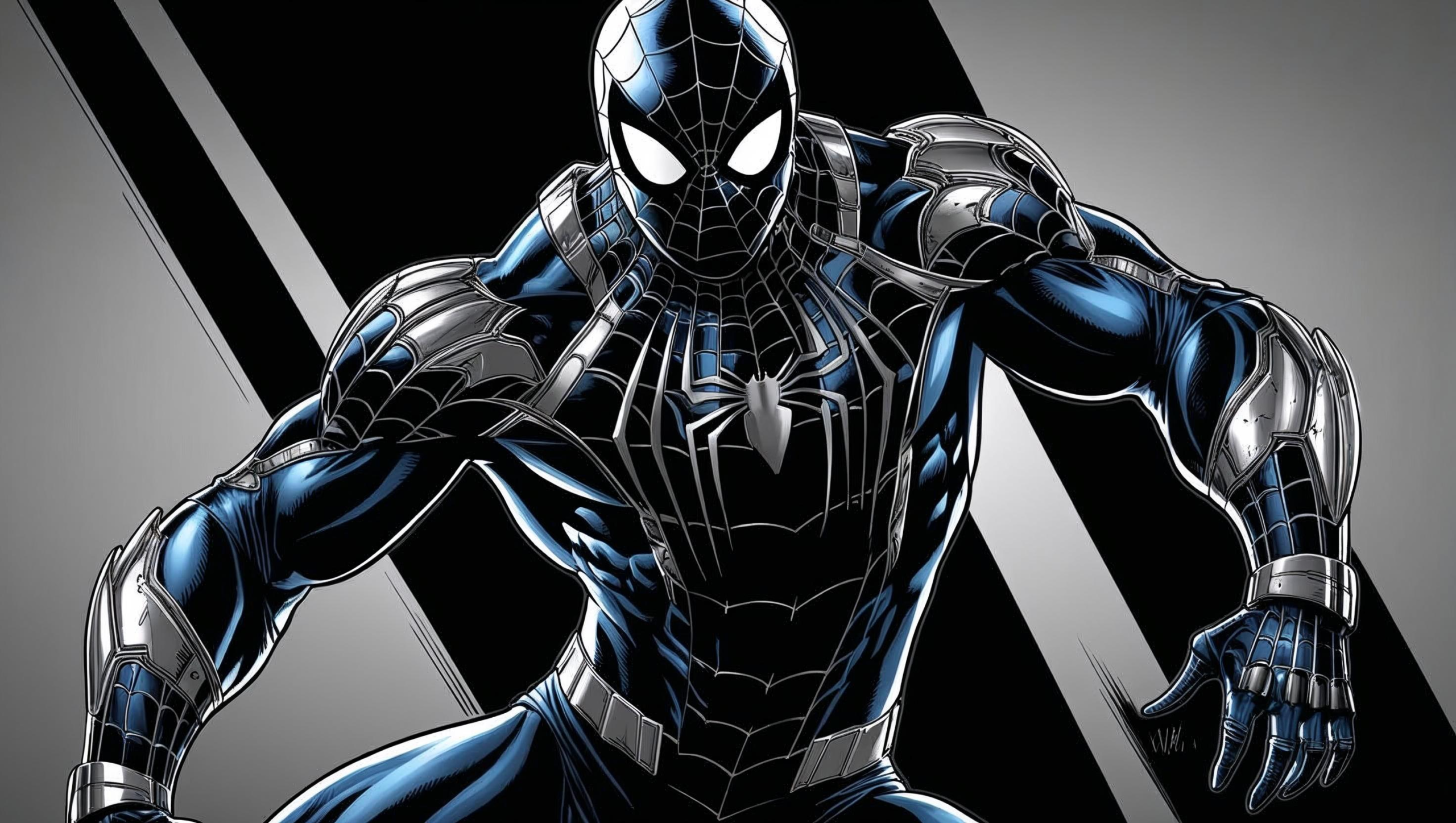
There is a version of Spider-Man that most audiences have never seen on screen. Not the wisecracking teenager stumbling through high school. Not the CGI spectacle swinging between skyscrapers while one-liners tumble out of his mouth. Not the warm, crowd-pleasing hero who always finds a way to make things work out in the end. The version hiding in the margins is something far more interesting: a man ground down by decades of loss, moral failure, and the suffocating weight of a responsibility he never asked for. That Spider-Man exists in the comics, has existed for a long time, and has been waiting patiently for the right medium to do him justice, finally. The question is whether Disney+ and Marvel Studios would ever have the courage to put him there.
The success of Daredevil on Netflix made a compelling case that Marvel’s street-level heroes belong on long-form television rather than in blockbuster films. What Charlie Cox’s Matt Murdock proved across three seasons was that darkness, consequence, and psychological complexity are not obstacles to a Marvel story. They are ingredients that make a Marvel story unforgettable. Daredevil worked because it committed fully to its tone. The violence was brutal and real. The moral dilemmas had no clean exits. The Catholic guilt, the blindness, the obsessive need to punish evil, even at personal destruction, were not softened for broader consumption. Marvel trusted the audience to sit with discomfort, and the audience rewarded that trust enthusiastically. Daredevil: Born Again, which brought Cox back to the role on Disney+, demonstrated that the appetite for that kind of storytelling had not faded.
Spider-Man shares far more DNA with Daredevil than most people are willing to admit. Both characters operate on the street level of New York City. Both are defined less by their powers than by their psychology. Both are driven by guilt as their primary motivating force. Peter Parker’s entire origin is built on a failure of moral nerve: he let a man walk past him who then murdered his uncle, and he has been paying for it every day since. That is not the setup for a light adventure story.
That is the architecture of tragedy. The comics understood this early and leaned into it hard. The Death of Gwen Stacy in 1973 remains one of the most gutting moments in superhero publishing history, a story in which the hero arrives too late, acts desperately, and may have inadvertently caused the death of the woman he loved. Harry Osborn’s descent into addiction and eventual death. The weight of marriage, of financial ruin, of secret identities that corrode personal relationships. Kraven’s Last Hunt, a 1987 storyline in which Spider-Man is buried alive while a hunter wears his skin, is as psychologically dark as anything Daredevil has ever explored.
A Disney+ series built around this material, structured with the patience and tonal discipline of Daredevil, would have every reason to succeed. The streaming format is precisely what a story like this requires. Film cannot hold the accumulation of exhaustion that defines Peter Parker at his most compelling. You need episodes, seasons, the slow-building pressure to show what it looks like when a good man is stretched past his limits, over and over, and somehow keeps showing up anyway. That gradual erosion and stubborn resilience are Spider-Man’s most powerful qualities, and they have never been given the room to breathe properly on screen.
The casting and age of the character would be critical. The MCU’s Tom Holland iteration, while charming and commercially successful, is structurally too young and too sunny to anchor this kind of story. A dark Spider-Man series would need Peter Parker in his late twenties or early thirties: someone who has been doing this long enough to be tired, who has buried people he loved, who questions whether the sacrifice is worth it, not as a passing doubt but as a genuine daily reckoning. This is not a criticism of Holland. It is an acknowledgment that the story being proposed here requires a different chapter of Peter Parker’s life entirely.
The obstacles are real and should not be dismissed. Sony Pictures still holds the film rights to Spider-Man, and the licensing arrangement between Sony and Marvel Studios is famously complicated. Any television series would require negotiation and cooperation between two studios with different commercial interests.
Beyond the legal architecture, there is the brand question. Spider-Man is arguably the single most valuable character in Marvel’s entire portfolio when it comes to merchandise, theme park attendance, and family audience loyalty. Pitching a dark, mature, psychologically heavy Spider-Man series means asking corporate stakeholders to accept short-term brand risk in pursuit of long-term creative credibility. That is a difficult conversation in any boardroom.
There is also the tonal tightrope to consider. Daredevil succeeds in darkness partly because Matt Murdock was never a bright character to begin with. Spider-Man’s power as a figure stems from the contrast between his optimism and the punishment the world inflicts on him. Drain too much of the light from Peter Parker, and you lose the very thing that makes his suffering meaningful. A gritty Spider-Man series would need to be disciplined enough to preserve that core warmth even as it surrounds it with genuine darkness. It is a harder creative balance to strike than Daredevil required, and it would demand writers who understand both the character’s soul and the purpose of the tone they are working in.
None of those challenges is insurmountable. Marvel has repeatedly demonstrated that it can thread the needle when it commits to a creative vision. What the studio would need to produce a genuinely great dark Spider-Man series is not just permission from Sony or confidence from Disney’s streaming division. It would need the willingness to treat Spider-Man as a fully adult character with a fully adult story to tell, to resist the pull toward crowd-pleasing safety at every turn, and to trust that the audience that grew up with Peter Parker is now old enough to meet him in the dark.
That audience is there. It has been there for a long time. They have read Kraven’s Last Hunt, the Death of Gwen Stacy, and Spider-Man: Blue, and every other story that proves this character carries more emotional and dramatic weight than any film has ever allowed him to carry. A Daredevil-style Disney+ series would not be a betrayal of Spider-Man. It would be the fullest version of him that screen audiences have ever been given the chance to know. The only real question is whether Marvel and Sony trust each other and the audience enough to let it happen, finally.
Show Your Support
Support the works of Strike 7 Network by heading over to our Patreon page and subscribing to one of our paid tiers. As a paid member, you will receive future Black Ghost stories and advanced chapters well in advance before they reach platforms such as Royal Road. If you are interested, click on the link below.
Strike 7 Network on Patreon



