
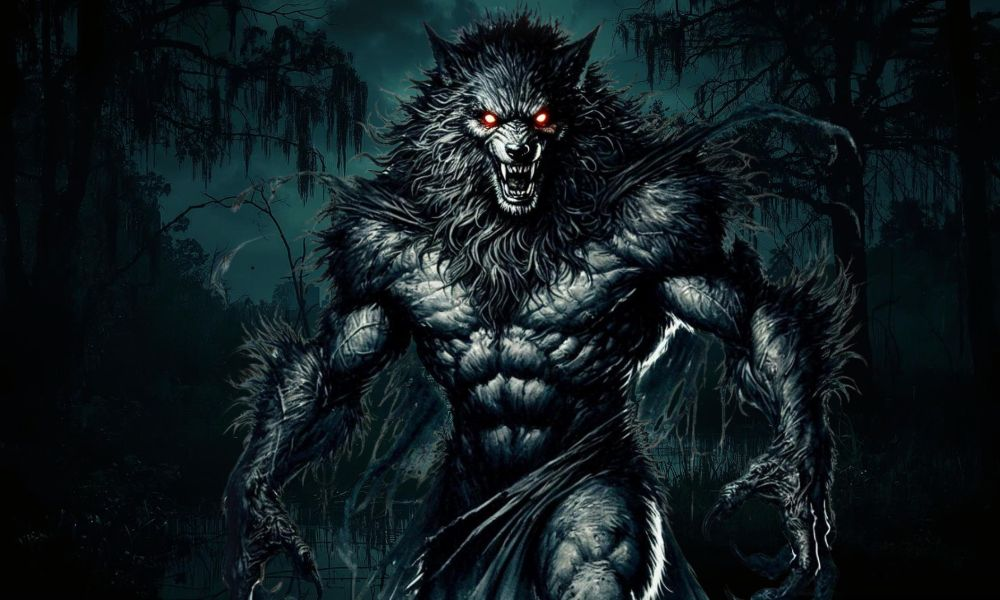
There is a moment that appears in werewolf fiction so consistently, across so many centuries and so many different mediums, that it has become something close to sacred mythology. A person is attacked in the dark. Teeth find flesh. The wound heals faster than it should. And then, under the next full moon, something that was entirely human begins the agonizing process of becoming something else. The bite is the beginning of everything. It is the handshake between the human world and the wolf world, the moment where one life ends and a stranger, wilder existence begins. Across movies, comic books, and novels, no other method of transferring lycanthropy has ever carried the same weight, the same dread, or the same mythological resonance as the bite. Other methods exist and have been explored with genuine creativity, but none of them hit the same nerve. Understanding why requires looking closely at what the bite actually does that no other method can replicate.
The most fundamental reason the bite endures as the preferred method is intimacy. A bite is personal in a way that a virus, a spell, or a laboratory procedure simply cannot be. When one creature bites another, there is proximity, there is force, there is the exchange of something biological and primal. It is not an accident, and it is not abstract. The lycanthrope chooses, consciously or in feral abandon, to sink teeth into human flesh. Saliva enters the bloodstream. Something ancient and infectious passes between predator and victim in a single violent instant.
This intimacy creates a narrative bond between the one who bites and the one who is bitten that other transfer methods cannot manufacture. In John Landis’s 1981 film An American Werewolf in London, David Kessler is attacked on the English moors and survives the encounter only to spend the rest of the film haunted by the werewolf who made him. The connection between them does not end with the attack. It persists, literally and psychologically, because the bite created something that feels less like a disease and more like a relationship.
This is the bite’s greatest narrative advantage over the viral model of lycanthropy. The viral approach has been explored thoughtfully in several works, most notably in the Underworld film franchise, where lycanthropy is explicitly framed as a virus that can be transmitted, studied, weaponized, and potentially cured. There is intellectual appeal to this framing. It grounds the mythology in science, gives it rules, and opens the door to medical drama alongside the monster drama. But something important is lost in the translation.
When lycanthropy becomes a virus, it becomes something that happens to a person rather than something done to them. The agency disappears. The horror becomes epidemiological rather than predatory. You can catch a virus from a doorknob. You cannot reduce the terror of the werewolf to a doorknob. The viral model makes lycanthropy feel like an unfortunate condition rather than a violent inheritance, and that distinction matters enormously to the emotional texture of the story being told.
The spell or curse method of lycanthropy transfer carries its own rich tradition, stretching back to ancient Greek mythology, most famously in the story of King Lycaon, whom Zeus transformed into a wolf as punishment for serving him human flesh. Medieval European folklore is dense with accounts of witches and sorcerers bestowing the wolf curse on enemies or willing participants through spoken incantations, enchanted belts, and magical ointments. In modern fiction, this tradition has been revisited in various forms. The spell method has one significant narrative advantage: it introduces a third party, the spellcaster, and with that comes questions of intention, power, and justice.
Was the curse deserved? Can it be broken? Who holds the authority to undo what was done? These are compelling, dramatic questions. But the spell method also creates distance. The transformation becomes something imposed from outside, a punishment handed down rather than a condition passed between creatures. The lycanthrope who was spelled into being has a different story than the one who was bitten in the dark. The bitten werewolf carries their maker inside them. The cursed werewolf carries a sorcerer’s judgment. These are fundamentally different psychological burdens, and fiction has generally found the former more dramatically fertile.
Scientific creation of lycanthropy, explored extensively in comic book mythology, introduces yet another layer of complexity. Marvel Comics has played in this space repeatedly, most notably through the Weapon X program and various gamma-radiation adjacent experiments that blur the line between mutation and transformation. The High Evolutionary’s work with New Men, uplifted animals given humanoid characteristics, sits in this territory as well.
In these scientific frameworks, lycanthropy becomes a question of genetics, of deliberate engineering, of bodies reshaped by human ambition rather than by the natural or supernatural world. This framing gives writers the ability to explore themes of corporate responsibility, military ethics, and the hubris of science, all legitimate and interesting territory. But scientifically created lycanthropes tend to read as something slightly different from traditional werewolves. They are experiments. They are products. The bite transforms the bitten into something ancient. The laboratory transforms its subject into something manufactured, and manufactured things carry a different kind of sorrow than cursed or infected ones.
What the bite does that none of these alternatives can fully replicate is create what might be called the predator lineage. When a werewolf bites a human being and that human being transforms, a pack dynamic is instantly established, whether either party wants it or not. The one who bit is, in some primal sense, the maker. The one who was bitten is the made one. This relationship drives some of the most compelling werewolf narratives in fiction precisely because it mirrors relationships that human beings already understand: the parent and the child, the mentor and the student, the abuser and the survivor.
In the Twilight novels, the werewolf mythology is significantly restructured, but the underlying dynamics of pack hierarchy and inherited transformation still orbit around the idea of who made whom and what that debt means. In the television series Teen Wolf, Scott McCall’s entire arc is shaped by the fact that he was bitten rather than born, making him an anomaly in a world where lycanthropic lineage typically runs through bloodlines. The bite gave him power he did not ask for, and a community he did not choose, and both define and complicate his identity throughout the series.
The bite also wins on the level of physical storytelling. It leaves a mark. Scars from werewolf attacks in fiction are rarely ordinary wounds. They are symbols worn on the body, visible evidence of the night everything changed. In Joe Johnston’s 2010 film The Wolfman, Lawrence Talbot carries his bite wound as both a physical reality and a psychological one, the scar a constant reminder of what he survived and what he is becoming. This visual grammar is enormously powerful in film and comics, mediums where the body communicates meaning directly to the audience. A character who was cursed by a spell shows no outward sign of their affliction until the moon rises. A character who was infected by a virus looks sick in the ordinary way that sick people look. A character who was bitten carries the wolf’s signature on their skin, a permanent annotation in flesh that says: something found me in the dark and decided to change me.
There is one final dimension to the bite’s enduring dominance in lycanthropic mythology that goes beyond narrative mechanics and into something almost philosophical. The bite represents consent’s opposite. It is a transformation imposed by force, by hunger, by the overwhelming physicality of a creature that does not ask permission. This is the core of the werewolf’s horror and its tragic appeal. The person who is bitten did not choose this. They were living an ordinary life, and something ancient and powerful decided to rewrite them from the inside out.
Every other method of lycanthropic transfer involves some degree of distance, intention, or abstraction. The viral model requires a pathogen. The spell requires a caster. The laboratory requires equipment and expertise. The bite requires nothing but teeth, darkness, and the terrible intimacy of one creature recognizing something in another that it wants to claim. That recognition, that violent claiming, is why the bite has never been replaced. It is the oldest, most human, and most inhuman thing in the werewolf story. Everything else is just an imitation of what happens when the wolf opens its mouth, and the world changes forever.
Show Your Support
If you enjoy grounded, brutal werewolf storytelling, Bayou Blood is an ongoing serialized novel available exclusively on our Patreon.
New chapters drop regularly, along with bonus lore and behind-the-scenes content.
Step into the darkness here.



